
Reviews
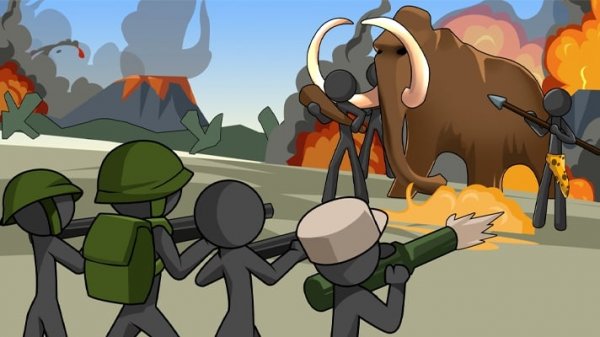
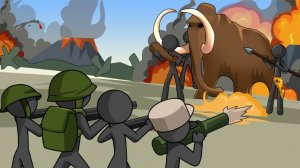
Timeline Commanders Stickman Strategy targets players who enjoy economy management and base construction without complex controls. The era-based progression from stone age to futuristic settings introduces new resource types and building options at each stage, which prevents the settlement loop from becoming static. Stickman commanders add a light tactical layer through task assignment and positioning. The main limitation visible in the source material is that exact roster sizes, opponent variety, and era-specific building lists are not detailed, so players seeking deep faction customization may find the scope narrower than expected.
About this game
Era Transitions and Resource Shifts
Each time period in Timeline Commanders Stickman Strategy introduces its own resource types and environmental conditions. Stone-age settlements rely on wood and stone, while industrial and futuristic eras shift toward energy and advanced technology. This means your gathering priorities and building options change with every age transition, forcing you to rethink production chains rather than repeating a single optimized layout. The finite nature of resources adds pressure: spending too heavily on one era's infrastructure can leave you short when the next transition arrives.
Commander Assignment and Unit Roles
Your stickman characters function as commanders rather than passive figures. Assigning them to gathering, construction, or defense directly affects how quickly your settlement develops and how well it withstands attacks. Because the game does not specify a fixed roster size, the practical takeaway is that positioning and task allocation matter more than raw numbers. A commander placed at a resource node accelerates collection; one stationed near defensive structures strengthens your response to enemy approaches.
Base Building and Defensive Layouts
Protecting your kingdom involves more than erecting walls. You must position defensive structures and units to counter enemy approaches, and each era may feature different opponent types with unique behaviors. Adapting your layout means observing attack patterns and adjusting formations before losses mount. The trade-off between faster expansion and stronger fortifications is constant: every material spent on defense is material not spent on production or research.
Economic Decisions Under Pressure
Managing your economy is central to survival. You decide where gathered materials go: upgrading the main base, producing more units, or researching new capabilities. Because resources are finite and the environment shifts with every age, careful players plan ahead to avoid shortages during enemy encounters. Watching resource flow and anticipating the next era's requirements helps prevent the kind of bottleneck that stalls expansion right when you need momentum.
Compatibility
FAQ
Comments
Sign in to leave a review
No comments yet.





Editorial Notes